Literature
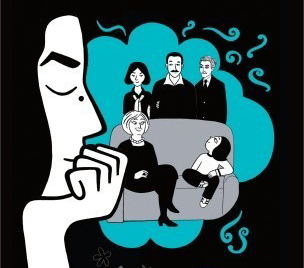
From acclaimed novels and memoirs to poetry and graphic narratives, Middle Eastern literature offers powerful insights into the region’s cultures, histories, and diverse voices. The books below introduce readers to a wide range of perspectives, exploring themes of identity, family, conflict, migration, faith, and social change through some of the Middle East’s most influential writers.
Literary Resources
Arab American Book Awards: The Arab-American National Museum (AANM) in Dearborn, Michigan is a literary program created to honor books written by and about Arab Americans. Books are awarded annually in the categories of Adult Fiction, Adult Non-Fiction, Poetry, and Children/Young Adult.
ArabLit.org is a leading online magazine and literary resource dedicated to Arabic literature in translation, featuring book reviews, author interviews, original translations, literary news, and essays that connect English-language readers with contemporary and classic Arabic writing.
Words Without Borders: A curated collection featuring fiction, poetry, essays, interviews, and book reviews from and about the Middle East, all available in English translation.
Selected Fiction
Celestial Bodies by Jokha Alharthi
The first book by an Arab woman to win the International Booker Prize, chronicling the lives and shifting histories of three sisters in an Omani village.
Frankenstein in Baghdad by Ahmed Saadawi
A chilling and darkly satirical horror-allegory that weaves elements of the supernatural into a war-torn Iraqi capital.
The Kite Runner by Khaled Hosseini
A devastating, beautifully written tale of betrayal, redemption, and friendship set against a deeply fractured Afghanistan.
Mornings in Jenin by Susan Abulhawa
An epic, heartbreaking historical fiction that traces four generations of a Palestinian family from their simple village life to the struggles of displacement.
The Yacoubian Building by Alaa Al Aswany
A sprawling, colorful, and highly realistic look at modern Egyptian society, following the diverse residents of a single downtown Cairo apartment block.
The Sand Child by Tahar Ben Jelloun
A lyrical and thought-provoking novel about a girl in Morocco who is raised as a boy to preserve her family’s honor, exploring themes of gender, identity, tradition, and the power of storytelling.
Memoirs/Graphic Novels
The Arab of the Future by Riad Sattouf
Visually clever and candid, this graphic memoir follows the author’s cross-cultural childhood growing up in Libya and Syria during the 1970s and 1980s. It provides a darkly funny, poignant, and often critical outsider’s eye on daily life in the region.
Cairo: My City, Our Revolution by Ahdaf Soueif
A firsthand memoir of Egypt’s 2011 revolution that blends personal reflection with political insight to capture the aspirations and challenges of a nation in transition.
Dreams of Trespass: Tales of a Harem Girlhood by Fatima Mernissi
A vivid memoir of the author’s childhood in a Moroccan harem, exploring family life, gender roles, and the desire for freedom through the eyes of a young girl.
Palestine by Joe Sacco
A groundbreaking work of graphic journalism. Sacco spent the early 1990s in the West Bank and Gaza Strip, combining extensive interviews with striking comic illustrations to document the everyday realities, history, and the human impact of the Israeli-Palestinian conflict.
Persepolis: The Story of a Childhood by Marjane Satrapi
A celebrated graphic memoir recounting the author’s childhood during the Iranian Revolution, offering a poignant and often humorous exploration of identity, family, and political upheaval.
Reading Lolita in Tehran by Azar Nafisi
A compelling memoir in which the author uses classic literature to examine life under the Islamic Republic of Iran and the resilience of women who find freedom through reading.