Past Event Category: MES Lecture Series
-
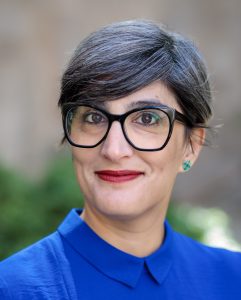 Mar 17Projecting Anxiety: Lebanon, Africa, and the Diasporic Condition
Ingraham 206
Ghenwa Hayek (University of Chicago) engages with critical contemporary scholarship in diaspora studies by using the Lebanese case to consider how the diaspora is imagined from within the homeland; and, further, how specific diasporic imaginaries and entanglements have been used to conceptualize national identity domestically.
-
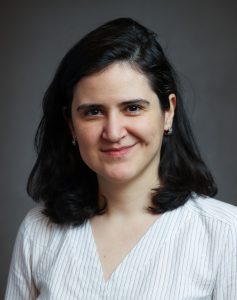 Mar 5The China-Morocco Relation: From Third World Internationalism to Strategic Hedging
Ingraham 336
Zaynab El Bernoussi is an associate professor of political science at The Africa Institute specializing in dignity politics, international relations, and the international political economy.
-
 Feb 24Palestine and Arab-Israeli Peace
Ingraham 206
This presentation will cover Arab-Israeli peace initiatives and their impacts following the 1994 Oslo Accords. The focus will be on American-led peace initiatives under both the Trump and Biden administrations, with a discussion of projected American foreign policy under a second Trump term.
-
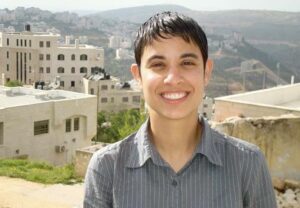 Feb 10Elastic Empire: Refashioning War through Aid in Palestine
Ingraham 206
Professor Bhungalia demonstrates how US empire operates as a topological formation that projects security and war power through opaque arrangements and blended genres of rule—in this case contracted relationships of aid—that render Washington’s counterterrorism regime intimately embedded in the lifeworlds of those afar.
-
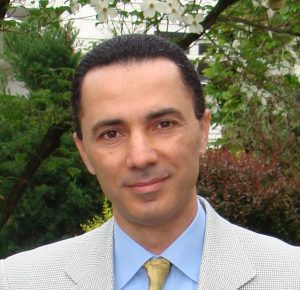 Nov 4Arab Brazil: Ternary Orientalism and the Question of South-South Comparison
Ingraham 206
Waïl S. Hassan (University of Illinois Urbana-Champaign) will discuss how the Arab world in Brazil works paradoxically as a site of otherness (different language, culture, and religion) and solidarity (with cultural, historical, demographic, and geopolitical ties).
-
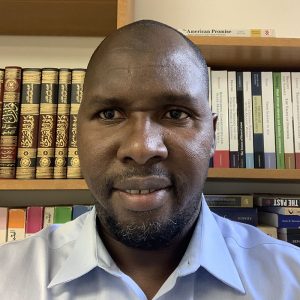 Oct 21Subaltern Intellectuals in Muslim Africa: Slavery, Artisanship, and Transregional Networks of Knowledge and Migration
Ingraham 206
Khaled Esseissah (UW-Madison) is an assistant professor and a historian of Islam, colonialism, slavery, race, and gender, with a focus on nineteenth- and twentieth-century West Africa.
-
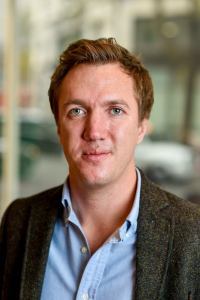 Sep 9Infrastructures of Revolt: Mass Politics and Anti-Colonial Revolutions in the Middle East
Ingraham 206
Neil Ketchley (University of Oxford) re-examines one of the key features of British colonialism – the building of infrastructure – and explores how this shaped the possibilities of anti-colonial revolution. Focusing on the 1919 Revolution in Egypt, he explores how Egyptians creatively repurposed the material circuitries of British colonial rule to launch mass protests calling …
-
 Mar 18Siege Creep: Waste, Airbnb, and Speculation between Israel/Palestine and Athens
Online via Zoom
Sophia Stamatopoulou-Robbins (Bard College) draws on long term fieldwork for two book projects, one based in Palestine and the other based in Greece, to make the case for thinking about the strategies people use to mitigate besieging circumstances through questions about infrastructure.
-
 Feb 26Staple Security: Bread and Wheat in Egypt
Online via Zoom
Jessica Barnes, associate professor at the University of South Carolina, explores the anxiety that pervades Egyptian society surrounding the possibility that the nation could run out of wheat or that people might not have enough good bread to eat.
-
 Feb 14War, Environment, and Infrastructure: Lessons From Middle East and North African Conflicts
Jeannie Sowers
Ingraham 206 Join Here for the Livestream!
Jeannie Sowers's research explores political and environmental change in the Middle East and North Africa, with a recent focus on protracted conflicts and environmental infrastructures.