Past Event Category: Sponsored by MESP
-
 Oct 14Layla Murad, the Jewish-Muslim Star of Egypt
Professor Hammad discusses the life and legacy of Layla Murad, one of the most beloved and remembered Arab singing stars in the twentieth century, to analyze politics of sexuality, ethnicity, socio-cultural interaction between Muslims and Jews, and the crucial role popular culture played in constructing an exclusive Arab-Islamic Egyptian identity.
-
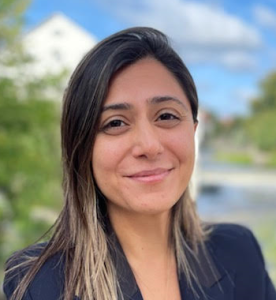 Sep 30Perceived Discrimination and the Integration Paradox in Stigmatized Neighborhoods
Ingraham 120
Residents of “European Banlieues,” or stigmatized neighborhoods in urban peripheries across Europe, are frequent subject targets of discrimination. But little research has systematically examined the attitudes of these neighborhoods’ residents. We fill this gap and ask how much discrimination immigrant residents of the most deprived neighborhoods in Sweden perceive, and whether perceived discrimination matters for their political incorporation.
-
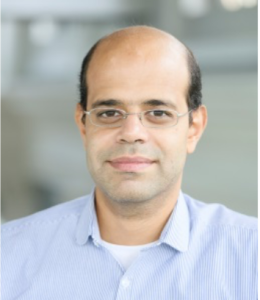 Apr 18Using Discourse to Incentivize Cooperation in Arab-Muslim Culture: Experimental Evidence from Egypt
Mazen Hassan, Professor of Comparative Politics at Cairo University, will discuss two questions: how could high contributors to public goods be encouraged to sustain their contributions against a defecting crowd? Second, how can low contributors be lured to increase their contributions without expensive institutional interventions or major structural transformations?
-
 Mar 7From Erasure to Remembrance: Affective Memories of Egyptian Feminists
This lecture will shed light on the political and intellectual trajectory of a pioneer suffragette in the history of Egyptian feminism, Duriyya Shafik, with the aim of exploring the processes of remembrance and forgetfulness of dissonant feminist voices in cultural memory.
-
 Feb 28The Ottoman Transition to Print: Technology, Aesthetics, and Textual Administration
Building upon my book, "Letters of Light: Arabic Script in Calligraphy, Print, and Digital Design" (2017, Harvard University Press), this talk explores Ottoman print adoption in comparative perspective.
-
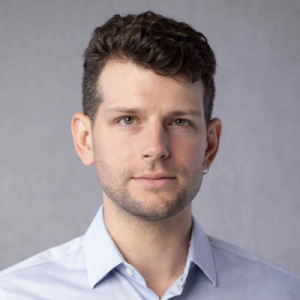 Feb 7Moral Matter: Property, Piety, and the Politics of Repair in Protectorate-Era Casablanca
Online via Zoom
This talk will consider how urban activists in 1930s Casablanca linked morality to materiality through critiques that politicized rent and repair under colonial rule. In the process, they articulated a vision for a more just distribution of urban resources that would remain a powerful pole for anti-colonial movements in the country.
-
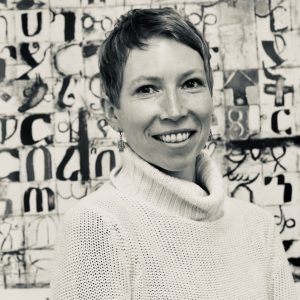 Dec 6Queer-Jewish-Muslim: Constructing Hyphenated Religious Identities through Tactics of Intersubjectivity
Katrina Daly Thompson takes a queer anthropological approach to entangled queer-Jewish-Muslim identities and relationships, first in the existing literature and then examining how two contemporary individuals involved in queer-inclusive Muslim groups navigate their hyphenated religious identities, practices, and heritages.
-
 Nov 22Gendering Protest and Revolutionary Moments: the significance of body politics in the Middle East
This talk will address gender as a central analytical concept in understanding contemporary processes and developments in the Middle East, and ask what feminist scholarship has contributed to our understanding of developments in the region.
-
 Nov 8Arab Fairy Tale Feasts: A Delicious Way to Explore Arab Culture, with author Karim Alrawi
Online via Zoom
Award-winning writer and storyteller, Karim Alrawi, draws on his personal knowledge of Arab culture to create original stories that are a feast for young minds. Told with intriguing details, the tales take young readers on a delicious cultural journey and invite them to consider an Arab perspective on food and the fantastical.
-
 Oct 25Waste Siege: The Life of Infrastructure in Palestine, with Sophia Stamatopoulou-Robbins
Based on Sophia’s book, this talk offers an analysis unusual in the study of Palestine: it begins with the environmental, infrastructural, and aesthetic context in which Palestinians forge their lives, naming that context a “waste siege".